
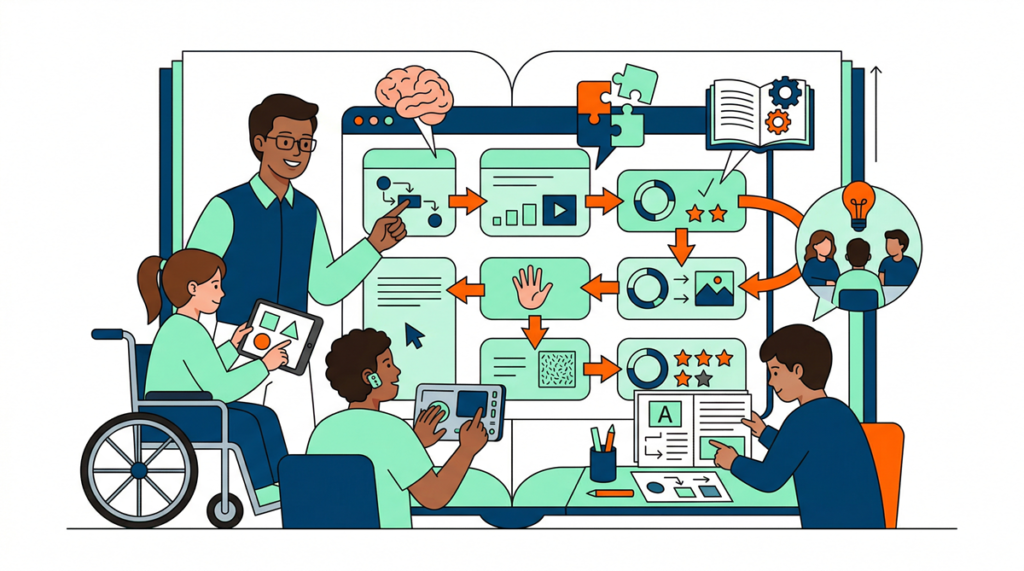
Designing inclusive learning experiences is no longer optional: it's a real necessity in today's classroom. If you're wondering how to create Special educational needs activities If you're looking for strategies that actually work, you're in the right place. Diversity in the classroom means catering to students with different abilities, paces, and learning styles, especially those with special educational needs (SEN). But how can you ensure everyone participates and learns meaningfully?
The key is to apply strategies of inclusive education supported by technological resources and active methodologies. In this article, you will discover how to design effective, practical, and adaptable inclusive education activities without complicating or overwhelming yourself. Additionally, we will explore concrete examples that you can apply in your classroom starting today. Ready to transform your teaching?
Table of Contents
- What are SEN activities and why are they important
- Key Principles for Designing Inclusive Activities
- Practical examples of SEN activities
- Digital Tools for Educational Inclusion
- Common mistakes and how to avoid them
What are SEN activities and why are they important
The Special educational needs activities These are designed specifically to assist students with special educational needs, adapting content, methodologies, and assessments. These activities not only benefit those with specific diagnoses but also improve the learning of the entire group.
The Importance of inclusive education It lies in offering equal opportunities. It's not about simplifying content, but about making it accessible. For example, the same objective can be approached with different levels of complexity or through different formats: visual, auditory, or manipulative.
In primary school, this approach is especially relevant. Children are in a key developmental stage, and inclusive activities foster social skills, empathy, and self-esteem. Can you imagine a classroom where everyone can participate without feeling excluded?
Furthermore, implementing SEN activities helps create a more equitable environment where each student progresses at their own pace. This not only impacts academic performance but also emotional well-being.
Key Principles for Designing Effective SEN Activities
To create Special educational needs activities truly effective, it is essential to follow some basic principles of Inclusive education. The first is flexibility: it adapts goals and allows different ways of accessing learning.
Another key principle is Universal Design for Learning (UDL). This approach proposes offering multiple means of representation, expression, and engagement. For example:
- Use of images and pictograms
- Oral or written response options
- Gamified activities to increase motivation
It is also important to know your students. Every child with special needs is unique. What motivates them? What difficulties do they face? This information will allow you to customize SEN activities more effectively.
Finally, the evaluation must be continuous and adapted. Not everyone should demonstrate learning in the same way. The key is to value individual progress.
Practical examples of SEN activities in the classroom
Moving from theory to practice is essential. Here are some examples of Special educational needs activities what you can easily implement
- Adapted reading: Texts with pictograms for students with comprehension difficulties
- Multisensory learning Use of manipulative materials in mathematics
- I work in shifts: different levels of difficulty in each activity
- Use of Technology Educational apps to reinforce content
If you're looking for more ready-to-implement ideas, you can explore this collection of STEM activities adapted for primary school, where you'll find accessible proposals that can also be adapted for students with special educational needs.
For example, in a science class, you could suggest that some students explain the topic with drawings, while others do it with an oral presentation. This way, everyone participates according to their abilities.
These strategies not only favor educational inclusion, but also make classes more dynamic and motivating. Have you tried any of them?
Digital tools for creating inclusive activities
Technology is a great ally in the creation of Special educational needs activities. There are platforms that allow for content customization, level adaptation, and progress tracking.
Some useful tools include:
- Custom token generators
- Accessible reading apps
- Personalized learning platforms
Furthermore, these tools simplify the teaching process, saving time and improving the quality of activities. If you are looking to optimize your work and offer inclusive experiences, you can explore solutions like Didaktos, which allow for simple and effective content adaptation.
Integrating technology doesn't mean complicating your teaching, but rather making it more accessible and efficient.
Common mistakes when designing SEN activities and how to avoid them
When creating Special educational needs activities, it's easy to fall into some mistakes. One of the most common is thinking that adapting means oversimplifying. This can limit learning.
Another frequent error is not diversifying strategies. Always using the same type of activity can exclude some students. Variety is key.
It is also important to avoid over-labeling or singling out students. Educational inclusion seeks to integrate, not isolate.
Finally, don't forget to constantly evaluate and adjust. An activity might work well with one group and not another. Continuous observation will allow you to improve.
Avoiding these mistakes will make a big difference in the impact of your activities.
Conclusions
Design Special educational needs activities It doesn't have to be complicated. With the right principles and the support of digital tools, you can create inclusive, effective, and engaging experiences. The key is to know your students, be flexible, and embrace innovation.
The inclusive education not only benefits those with special needs but the entire group. Would you like to continue learning and improving your strategies? Explore more resources and tools at Didaktos and take your classroom to the next level.
 Español de Puerto Rico
  English