Definitive Guide
What Does STEM Mean? The Definitive Guide
Find out all about STEM: science, technology, engineering and mathematics. Its impact on education, the future of work and how it is transforming the world.

What does STEM mean?
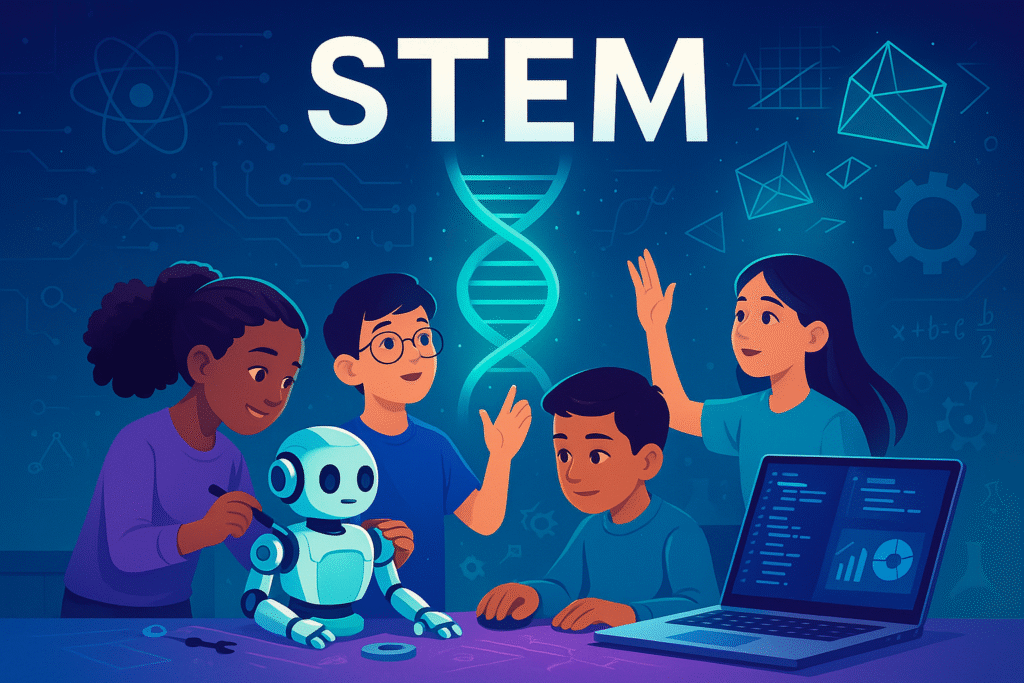
STEM is an acronym that stands for Science, Technology, Engineering, and Mathematics, which in Spanish translates as Science, Technology, Engineering and Mathematics.
Represents a interdisciplinary educational approach that integrates these areas to foster critical thinking, problem solving and innovation.
The main objective of STEM is to prepare students and professionals for the challenges of the 21st century, especially in a world dominated by technology, automation and data.
Origin of the term STEM
The term STEM was popularized in the 2000s by the National Science Foundation (NSF) in the United States. Initially “SMET” was used, but it was reorganized to STEM for clarity and recall.
Since then, the concept has been adopted globally as the strategy to strengthen science and technical education, responding to the demand for talent in technology sectors.
In Spain and Latin America there are programs to promote STEM from an early age, with a focus on inclusion and equity.
The 4 Areas that make up STEM
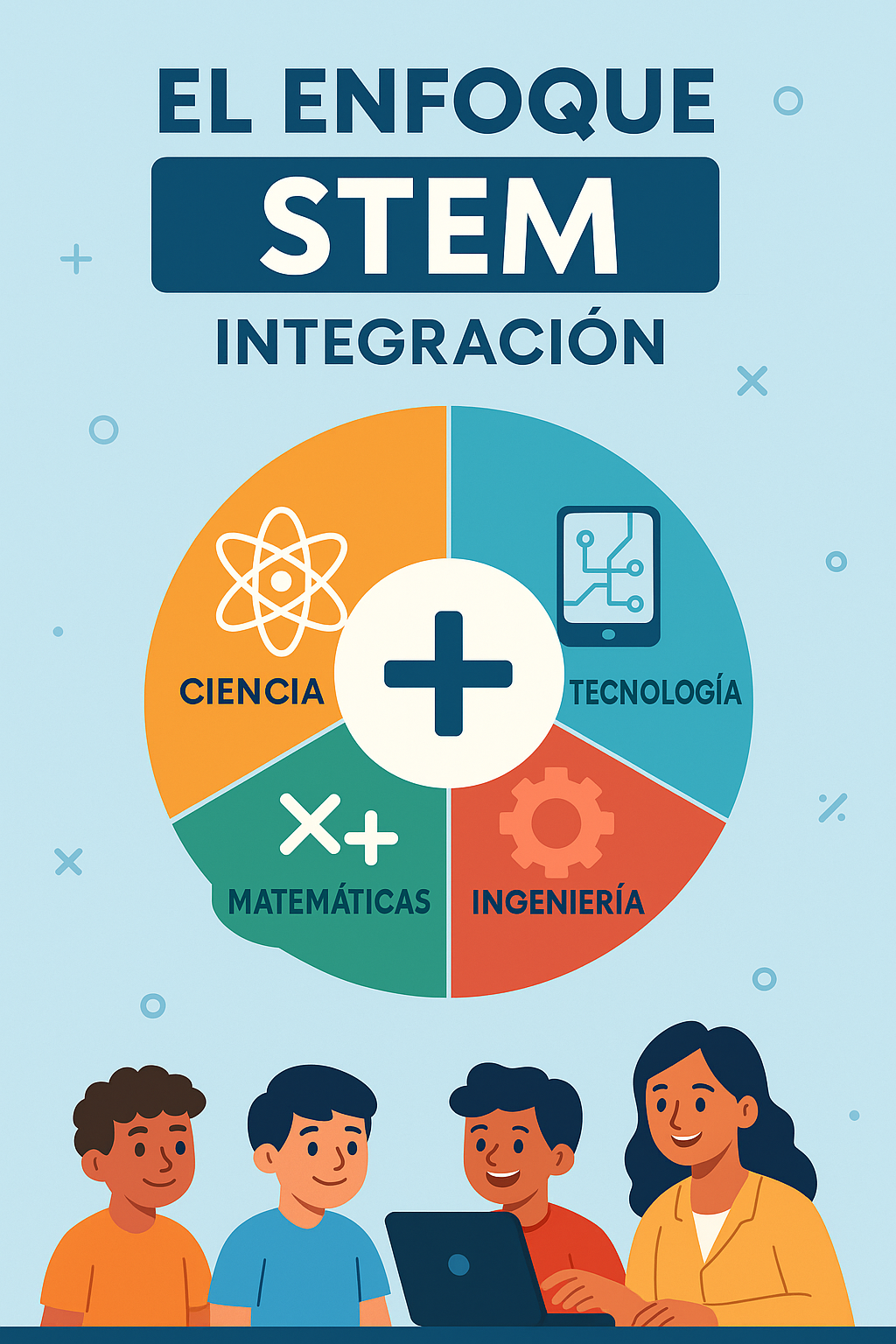
STEM integrates disciplines that work together. Bottom line:
- Science: Biology, chemistry, physics, astronomy and earth sciences.
- Technology: Digital tools, software and systems (programming, AI, cybersecurity).
- Engineering: Application of scientific principles to design solutions (from bridges to robots).
- Mathematics: Language of logical reasoning (data, cryptography, modeling, algorithms).
Power arises when these areas are combined in real projects.
Why is STEM Education Important?
STEM education is essential because:
- Future of work: 65% of the children will work in jobs that do not yet exist.
- Critical thinking: Analyze, experiment and decide with evidence.
- Gender equity: Programs that promote the participation of girls and women.
- Innovation: Countries with strong STEM lead in patents and technological development.

Benefits of the STEM Approach in Education
Adopting a STEM approach offers:
- Active learning: You learn by doing.
- Teamwork: Collaboration and communication.
- Real problems: Climate change, public health, energy.
- Careers of the future: AI, bioengineering, renewable energies.
Evidence shows improved academic results and sustained motivation.
Most In-Demand Careers in STEM Fields
Some of the most sought-after professions:
- 💻 Software Engineering
- 🧠 Data Science
- 🔒 Cybersecurity
- 🧬 Bioengineering / Biotechnology
- 🔋 Renewable Engineering
- 🤖 Artificial Intelligence and Machine Learning
10-year growth projection higher than the average of other areas.
STEM in Spanish: Why isn't it just a translation?
Although some use “CTIM”, STEM maintains greater global recognition and presence in educational materials and employment. The key is adapting content to the local context with relevant and inclusive examples.
STEM Frequently Asked Questions
What does the ‘E’ in STEM stand for?
The ‘E’ stands for Engineering: design and construction of technical solutions.
Does STEM include art?
There is a variant STEAM, which integrates the arts to enhance creativity and design.
Why is STEM important for girls?
Helps close the gender gap and diversify innovation.
From what age can STEM be taught?
From the 3 years with simple and playful activities.
Where can I study STEM online?
Platforms such as Coursera, edX, Khan Academy and MIT OpenCourseWare offer free and certified courses.
🚀 Ready to Learn More about STEM?
Download our guide with resources, activities and career paths of the future.
 Spanish
 English