Content
Homeschooling: A Complete 2025 Guide for Parents
Find out all about the home education: methods, laws, resources, advantages and how to get started. Ideal for families looking for a flexible and personalized alternative to traditional schooling.
What is Homeschooling?
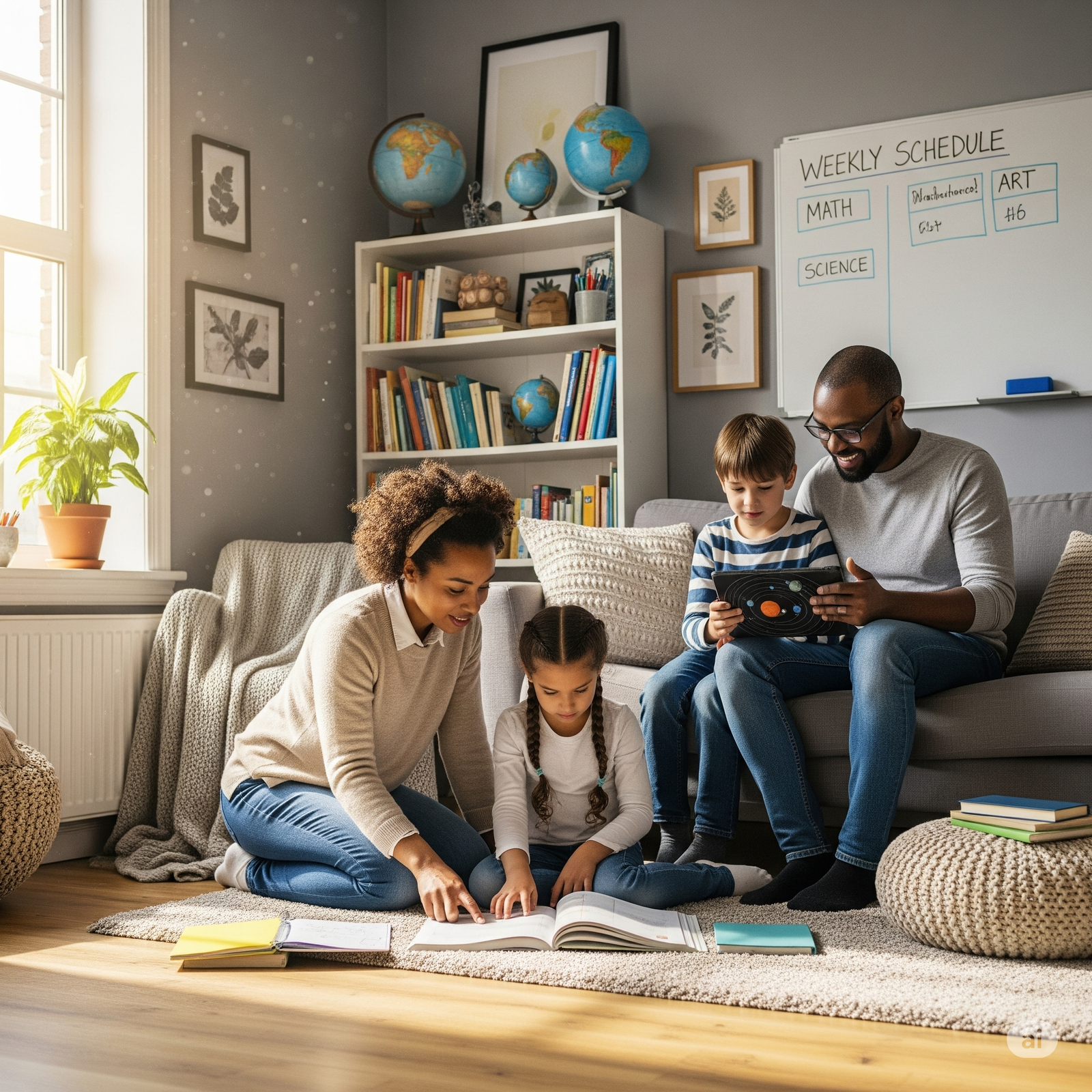
The homeschooling, Home schooling, also known as home education, is an educational modality in which parents or guardians assume responsibility for their children's education outside the traditional school system.
Unlike schooling, homeschooling allows for a more personalized, flexible education adapted to the pace, interests and needs of the student. of each child. It can follow official curricula, international programs or alternative pedagogical approaches such as Montessori, Waldorf or unschooling.
In recent years, this practice has grown exponentially, especially after the pandemic, and is legal in more than 60 countries, including Spain, Mexico, Argentina and Colombia.
Benefits of Homeschooling
- Personalized education: Learning adapted to the cognitive style of each child.
- Increased family time: Strengthens emotional bonds and parental support.
- Time flexibility: It allows you to travel, learn at any time and at any pace.
- Less school stress: Avoid bullying, excessive pressure and accelerated rhythms.
- Focus on talents: Delve into areas of interest such as art, programming or languages.
- Values formation: Parents may integrate ethical, cultural or religious principles.
Studies such as those of the National Home Education Research Institute (NHERI) indicate that homeschooling students tend to achieve above-average academic results.
Most Used Homeschooling Methods
There is no one way to do homeschooling. Here are the most popular approaches:
1. Traditional (Home School)
Uses textbooks, set schedules and assessments. Ideal for families who want school-like structure.
2. Unschooling (Natural Learning)
The child guides his or her learning based on interests. There is no fixed curriculum. Ex: a child who loves dinosaurs learns history, biology and geology from that topic.
Montessori Method at Home
Focus on autonomy, sensory materials and hands-on learning. Uses workstations and freedom with limits.
4. Waldorf
Prioritize imagination, art and rhythm. Avoid screens at early ages and encourage oral storytelling and crafts.
5. Charlotte Mason
Teaches with «living books», nature, art and storytelling. It values moral formation and love for knowledge.
6. Hybrid Education
Combines homeschooling with face-to-face or online classes (academies, workshops, part-time schools).
Download Comparison of Methods (PDF)Homeschooling Laws in Spain and Latin America
The legality of homeschooling varies widely from country to country. Here is a summary:
| Country | Is it legal? | Requirements |
|---|---|---|
| United States | Yes (50 states) | Annual registration, evaluations, approved curriculum |
| Spain | Yes, with restrictions | Medical or geographic justification; judicial authorization |
| Mexico | Yes (art. 3° Constitutional) | SEP registration; annual evaluation |
| Argentina | Yes | Registration in jurisdiction; pedagogical follow-up |
| Colombia | Yes | Registration with the Secretary of Education; evaluations |
| Chile | Under discussion | Not formally regulated; legal risk |
Tip: Always consult with a local homeschooling association before starting. In Spain, Education in Sincole offers legal advice.
Educational Resources and Materials
There are hundreds of free and paid resources to support your process:
- Khan Academy Kids: Free app for children from 2 to 8 years old.
- CK-12: STEM books and simulations in Spanish.
- Project Gutenberg: Classic books in digital format.
- Educational YouTube: Channels such as “MinuteEarth”, “Crash Course Kids”.
- Homeschooling Associations: Support groups, meetings and tutorials.
- Course platforms: Domestika, Khan Academy, Coursera (for seniors).
How to Get Started with Homeschooling
- Research the laws in your country or region.
- Define your focus: Traditional, unschooling, Montessori?
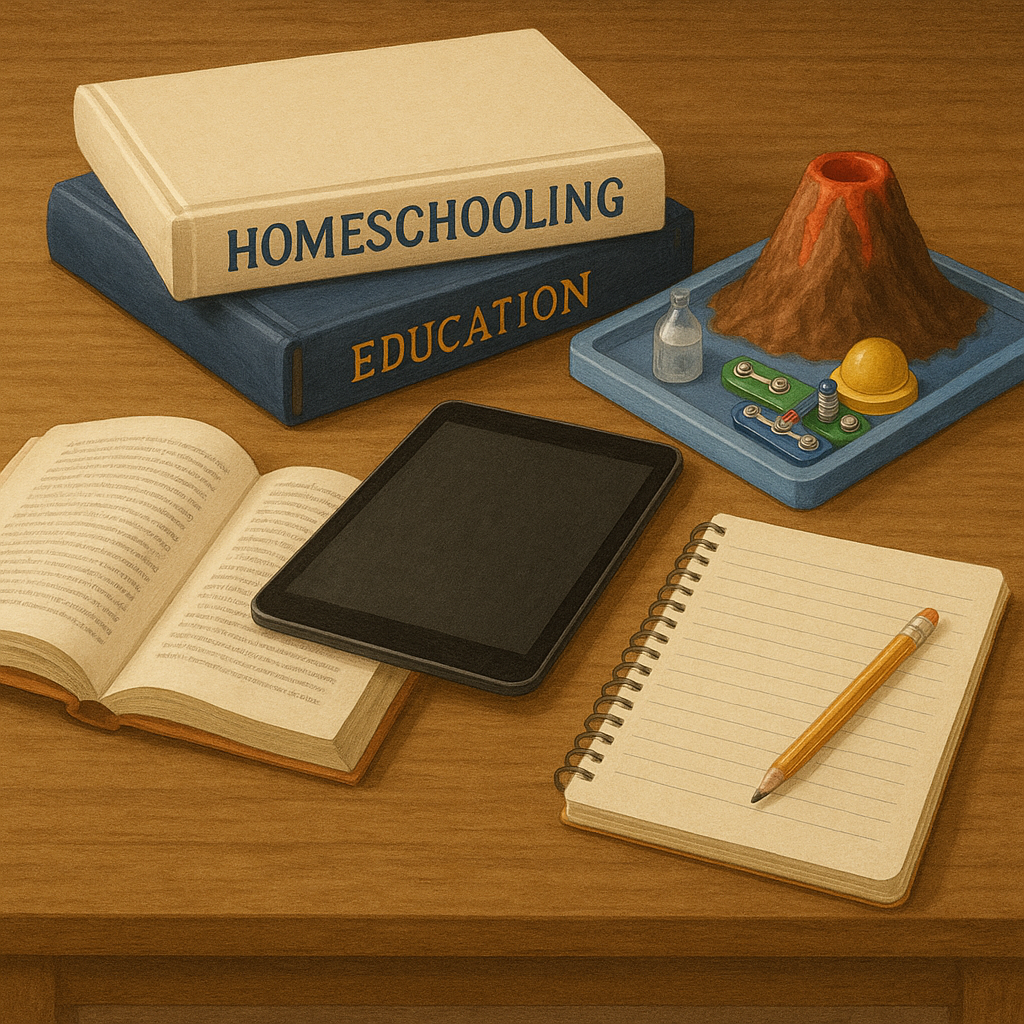
- Establishes a learning space at home (orderly and motivating).
- Plan a flexible schedule that includes time for play and rest.
- Join communities of homeschooling (Facebook, associations).
- Periodically evaluates progress without putting pressure on the child.
- Document the process: Portfolios, photos, learning journals.
Tip: Start with a one-month trial. See how your child reacts before you commit.
Download Planning TemplateFrequently Asked Questions about Homeschooling
Is homeschooling legal in my country?
It depends on the country. In Mexico, Argentina and Colombia it is legal with registration. In Spain it is possible under medical or geographic justification. In Chile it is not regulated. Consult with a local association.
Can I do homeschooling if I work?
Yes, many families combine remote work, flexible schedules or hybrid education. Some parents take turns or use online tutors.
How do children in homeschooling socialize?
Through playgroups, workshops, sports, extracurricular classes and meetings with other homeschooling families. Socialization is intentional and quality.
Do I need to be a teacher to do homeschooling?
No. Many parents without teacher training educate successfully. The key is accompaniment, curiosity and the use of good resources.
What about high school and college?
In many countries, students can take free examinations or validate their studies. In the U.S. and Canada, universities accept homeschoolers with strong portfolios.
 Spanish
 English